| September - October 2006 | |||||||
|
|
European American Evangelistic Crusades |
||||||
|
The Flaming Sword |
|||||||
|
DANCING AROUND THE GOLDEN CALF - PART 3 FASHIONING THE GOLDEN CALF By JOHN S. TORELL |
|||||||
|
In my previous newsletter, we looked at the life of John Nelson Darby and now I want to show you who influenced and financed him. But before we get into that, let me briefly give you a general sketch of what life was like in the United States at that time. The reason for this is to show you how much damage has been done to our nation. I am devoting a large portion of this newsletter to explain the financial situation from the mid-1850’s to our current time since money was the driving force behind false doctrine. The men and women responsible for introducing false doctrine to the Christian church back then were well taken care of by international Jewish Bankers, even to this day, all while Bible preaching fundamental ministers are being starved and hindered by the removal of their financial support. THE UNITED STATES IN THE 1850-1890’s This was a time of great expansion as factories were built to usher in mass production, a railroad system was constructed to encompass the entire nation, and more public schools were added. The gold rush in California spearheaded a push to enlarge the United States all of the way to the Pacific Ocean under the slogan “Manifest Destiny.” Immigrants came pouring into the nation after the end of the Civil War. (1861-65), There was a mass immigration from Europe led by Finns, Swedes, Danes and Norwegians, most of whom were looking for farmland and ended up settling in Minnesota, the Midwest and Texas. There were also Germans, Irish, and people from Eastern Europe. There were even a large number of Jews from all over Europe who decided to immigrate to the U.S. It is interesting to note, that internally, they divided themselves into several classes. The “Hofjuden” from Germany were well educated and financially well-off, those from Russia and Poland were poor and there were those from other European nations who were neither rich nor poor. Cash was scarce, and most hard working Americans suffered much after the Civil War, when Jewish New York Bankers shrank the economy by taking dollar notes out of circulation. LINCOLN’S GREENBACKS (The following discussion of the monetary history of the United States is taken from the book “LINCOLN MONEY MARTYRED,” by Dr. R. E. Search, and was first published in 1935, with the last reprinting in 1985 by Omni Publications. [1] The author wrote the book during the Great Depression, only some 40 years after the crash of 1893. Some of the statistics below were retrieved by Dr. Search from a book written in 1879 entitled, “Seven Financial Conspiracies” by Mrs. S.E.V. Emery. NO MONEY TO FIGHT A WAR
The Rothschild banking family was furious and declared war on “Lincoln’s Greenbacks” as they were known and set about to destroy them politically. By 1866, one year after the Civil War had ended, the Jewish bankers had corralled enough congressmen and senators to pass “THE CONTRACTION ACT,” which became law on April 12, 1866. It basically authorized the Secretary of the Treasury to issue 5% twenty (20) year bonds, and with the proceeds, retire U.S. currency including greenbacks, and cremate or burn them up. The result was a reduction of the currency in circulation. Most Americans have never learned about these money matters in history classes taught in the public schools. I am detailing this in order to help the reader understand that when men like Darby and Scofield were able to travel, it was because they had financial support from hidden sources, all while the nation suffered greatly. STATISTICS At the beginning of 1866, there was $1,906,687,770 cash in the country. During that year, $17,625,000 was taken out of circulation and destroyed; 520 businesses that year failed and went under. In 1867, the Jewish bankers ordered $86,218,000 destroyed and 2,386 businesses went bankrupt. In 1868, 473 million dollars were taken out of circulation and cremated and 2,608 businesses folded and ceased to exist. In 1869, 500 million dollars was destroyed and 2,799 businesses went under. In 1870, 67 million dollars was taken out of circulation and cremated and 3,551 businesses were destroyed that year. In 1871, 35 million dollars was burned by the government, resulting in the bankruptcy of 2,915 businesses. With the government taking so much cash away from the American public, unemployment was now a real problem and wages were lowered because so many people were looking for jobs. In 1872, the slaughter of the American economy continued with 12 million dollars being cremated; 4,069 businesses went under, wages continued to decrease and rumbling about strikes were common across the nation. In 1873, 1.6 million dollars were taken out of circulation and burned with turmoil beginning to take place all over the country. The Jewish bankers were merciless and pressed the government to continue the slaughter of the American economy. Panic began to be widespread and 5,183 businesses went under. Half a million workers lost their jobs and strikes were common all across the country. In 1874, 75 million dollars was taken out of circulation and cremated. This year was even worse as 5,832 businesses went under and there were now more than one million people unemployed. Strikes were even more common all over the country. 1875 was a catastrophic year for the United States. Some 40 million dollars were taken out of circulation and burned that caused 7,740 businesses to go under. Two million workers were unemployed and many families could no longer afford food; starvation was rampant on a large scale. Many men became tramps and drifted all over the nation. I want to interject the following observation at this time. For ten years, the different presidents and congressmen had watched helplessly as the Jewish bankers caused a deep depression in the nation, but few lawmakers stood up and tried to stop it. The corruption in Washington D.C. was appalling and there was little if no leadership in the different states trying to clean up the corrupted banking system. The American economy was totally controlled by Jewish and American bankers and still is to this day. 1876 was another terrible year, as 85 million dollars was taken out of circulation and destroyed, causing the bankruptcy of 9,092 businesses. The unemployment had risen to three million people; wages were cut so low that people could not afford to buy food, and as a result, strikes and riots were common all over the country. People were losing their homes, farms and businesses; all of which were bought for pennies on the dollar, just like it happened during the Great Depression in the early 1930’s. The rich got richer and the poor got poorer. Ownership of land, factories, railroads etc. was now transferred to the bankers and a few elite families. From 1877 through 1878, some 10,478 businesses failed. By now, a resistance movement had gained steam and laws were passed in congress to allow expansion of the economy through the issuance of silver dollars. I now quote from Encyclopaedia Britannica: “The Panic of 1873 and the subsequent depression polarized the nation on the issue of money, with farmers and others demanding the issuance of additional greenbacks or the unlimited coinage of silver. In 1874, champions of an expanded currency formed the Greenback-Labor Party, which drew most of its support from the Midwest; and after Congress passed the Resumption Act in 1875, which provided that greenbacks could be redeemed in gold beginning Jan. 1, 1879, the new party made the repeal of that act its first objective. The 45th Congress (1877–79), which was almost evenly divided between friends and opponents of an expanded currency, agreed in 1878 to a compromise that included retention of the Resumption Act, the expansion of paper money redeemable in gold, and enactment of the Bland–Allison Act, which provided for a limited resumption of the coinage of silver dollars. In the midterm elections of 1878, the Greenback-Labor Party elected 14 members of Congress and in 1880 its candidate for president polled more than 300,000 votes, but after 1878 most champions of an expanded currency judged that their best chance of success was the movement for the unlimited coinage of silver.” To sum up these terrible years, look at the following figures: In 1865, the population in the United States numbered 34,819,581 with $1,651,282,373 of currency in circulation. If we were to take that cash number and divide it by the population, it would show there was $47.42 for each American at that time. In 1877, the population had risen to 47,714,829 but the cash total had shrunk to $696,443,394. Using the same mathematical formula, we find that the cash available was only $14.60 per capita. MANIPULATION OF THE CHRISTIAN CHURCH I want to show the reader that regardless how much Jewish leaders detest and loath the Christian faith, they will still court Christians when it is beneficial to their interests. James Buel, the secretary for the American Bankers Association, wrote a letter in 1877 to all the member banks. Here is an excerpt: “Dear Sir: It is advisable to do all in your power to sustain such prominent daily and weekly newspapers, especially the Agricultural and Religious Press, as will oppose the greenback issue of paper money and that you will also withhold patronage from all applicants who are not willing to oppose the government issue of money…” Bankers would issue credit lines to those in the press who held the same viewpoint and deny it to those who opposed them. They were working hard to brainwash the American people and sway public opinion in their favor. Today, this same tactic is used on a scale a thousand times larger than they were able to do in 1877. The World Government through international Jewish banking interests is controlling the news presented on television, radio and in print. No major news organization dares to present a different view than what has been established to be “politically correct.” HISTORY REPEATS ITSELF The chronic cash shortage in the United States led to an increased borrowing on credit. The economy started to pick up with the issuing of silver dollars in 1878, the country was still in depression, but instead of sinking further, the economy slowly started to grow. I want to again remind the reader that there really was an economic war going on between the Jewish bankers and Congress. According to the Constitution, Congress has the authority to issue currency, but the European Jewish bankers and their cousins in New York and Boston wanted to take away that right and give it to themselves. If the U.S. government issued its own money, there would not be any interest paid to the bankers, nor could they dictate the political decisions and policies of the nation. By 1880, the U.S. economy was expanding rapidly due to the fact that more and more silver dollars were entering the market. The bankers realized that the stranglehold they had put on the nation was about to break, therefore, they moved strongly in what became known as “The Bankers Rebellion.” All banks began to call in their loans, demanding an early payment. Consequently, with credit being reduced almost overnight, it shrunk the amount of cash available and took it further down to $10.23 per capita. The years 1881 through 1892 were financially shaky, with bankers slowly increasing their credit, and putting most of the economy on a credit base. The rate of business failure was high and most people knew that sooner or later the bubble would burst. That came about on March 11, 1893, when the American Bankers Association issued a circular which became known as “The Panic Circular of 1893.” Here is the letter: “Dear Sir: The interest of the National Banks requires immediate financial legislation by Congress. Silver certificates and treasury notes must be retired and National Bank Notes upon a gold basis the only money. This will require the authorization of 500 millions to 1,000 millions of new bonds as the basis of circulation. You will at once retire one-third of your circulation and call one-half of your loans. Be careful to make a monetary stringency (scarcity) among your patrons, especially among influential business men. Advocate an extra session of Congress to repeal the purchasing clause of the Sherman Law and act with other banks in your city in securing a large petition to Congress for its unconditional repeal per accompanying form. Use personal influence with your Congressmen and particularly let your wishes be known to your Senators. The future life of national banks as fixed and safe investments depends upon immediate action as there is an increasing sentiment in favor of Government legal tender notes and silver coinage.” Very few
people today knew that prior to 1873, anyone could bring their silver to a
U.S. government mint, which would melt the silver and cast it into silver
dollars free
“John Sherman, born May 10, 1823, Lancaster Ohio, died October 22, 1900 in Washington D.C. American statesman, financial administrator, and author of major legislation concerning currency and regulation of commerce. A younger brother of General William Tecumseh Sherman, he practiced law in Ohio before entering politics. He served in the U.S. House of Representatives (1855-61) and in the U.S. Senate (1861-77, 1881-97) and was secretary of the Treasury under President Rutherford B. Hayes (1877-81 Early in his congressional career Sherman gained a reputation as a fiscal expert. He was chairman of the House Ways and Means Committee (1859–61) and of the Senate Finance Committee (1867-77). He consistently preferred conservative financial policies but was often forced to balance his own convictions with the preferences of his constituents, many of whom favoured inflationary measures. He had a leading role in the establishment of the national banking system (1863), in the enactment of the bill (1873) that discontinued the coinage of silver dollars (denounced by critics as the “the crime of '73”) and of the Specie Payment Resumption Act (1875), which provided for the redemption of Civil War greenbacks in gold. It was thus largely through his efforts that the United States returned to the gold standard. During the administration of President Benjamin Harrison, the Antitrust Act of 1890 and the Silver Purchase Act of the same year bore his name, but both represented compromises that had only his qualified approval.” THE FEDERAL RESERVE BANK The murderous and relentless attacks on the American economy eventually led to the United States Congress surrendering the right to issue money in 1913. I do not intend to discuss this private banking institution in this newsletter, but to show the reader how the international Jewish bankers were finally able to capture and control the economy. I quote the following from Encyclopedia Britannica: “Federal Reserve System is the central banking authority of the United States. It acts as a fiscal agent for the U.S. government, is custodian of the reserve accounts of commercial banks, makes loans to commercial banks, and oversees the supply of currency, including coin, in coordination with the U.S. Mint. Created by the Federal Reserve Act of 1913, the system consists of the Board of Governors of the Federal Reserve System, the 12 Federal Reserve banks, the Federal Open Market Committee, the Federal Advisory Council, and, since 1976, a Consumer Advisory Council; there are several thousand member banks. “The seven-member Board of Governors of the Federal Reserve System determines the reserve requirements of the member banks within statutory limits, reviews and determines the discount rates established by the 12 Federal Reserve banks, and reviews the budgets of the reserve banks. The Chairman of the Board of Governors is appointed to a four-year term by the president of the United States. “A Federal Reserve bank is a privately owned corporation established pursuant to the Federal Reserve Act to serve the public interest; it is governed by a board of nine directors, six of whom are elected by the member banks and three of whom are appointed by the Board of Governors of the Federal Reserve System. The 12 Federal Reserve banks are located in Boston; New York City; Philadelphia; Chicago; San Francisco; Cleveland, Ohio; Richmond, Virginia; Atlanta, Georgia; St. Louis, Missouri; Minneapolis, Minnesota; Kansas City, Missouri; and Dallas, Texas. “The 12-member Federal Open Market Committee, consisting of the seven members of the Board of Governors, the president of the Federal Reserve Bank of New York, and four members elected by the Federal Reserve banks, is responsible for the determination of Federal Reserve bank policy to encourage long-term objectives of price stability (i.e., controlling inflation through the adjustment of interest rates) and economic growth. The Federal Advisory Council, whose role is purely advisory, consists of one representative from each of the 12 Federal Reserve districts. “The Federal Reserve System exercises its regulatory powers in several ways, the most important of which may be classified as instruments of direct or indirect control. One form of direct control can be exercised by adjusting the legal reserve ratio—i.e., the proportion of its deposits that a member bank must hold in its reserve account—thus increasing or reducing the amount of new loans that the commercial banks can make. Because loans give rise to new deposits, the potential money supply is, in this way, expanded or reduced. “The money supply may also be influenced through manipulation of the discount rate, which is the rate of interest charged by Federal Reserve banks on short-term secured loans to member banks. Since these loans are typically sought by banks to maintain reserves at their required level, an increase in the cost of such loans has an effect similar to that of increasing the reserve requirement.” LOOK AT THESE FACTS
The owners of the banks in America waged a ruthless and relentless war from 1860 to 1913 (43 years) against our nation and succeeded in obtaining all they demanded, leaving the United States powerless over its own finances. During these 43 years, American men, women and children suffered at the hands of the money lenders as they faced unemployment, starvation and severe poverty. President Lincoln paid with his life on April 15, 1865, for trying to introduce interest free money issued by the U.S. government. It was the international banking syndicate which ordered, paid for, and trained the group of men who were part of the assassination team that took his life.
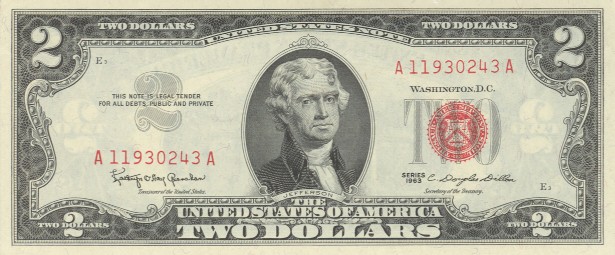
“June 4th, 1963 Executive Order 11.110 …The little known Executive Order calls for the issuance of $4,292,893,815 in a new currency called, United States Notes. These notes were to be issued through the Treasury, rather than through the traditional method of the Federal Reserve System. The same day, Kennedy also signed a bill changing the backing of one and two dollar bills from silver to gold, adding strength to the weakening U.S. currency. Very shortly after Kennedy was shot, the brand new U.S. currency was quickly withdrawn from circulation (just like the Greenbacks) never to be heard of again.” [2] In the 1968 primary elections for a new president, Robert F. Kennedy was nominated as the Democratic candidate. Having been the right hand of his brother, John, during his presidency, he knew why his brother had been murdered. Robert promised in his campaign speeches that he would finish what his brother could not do. On June 6, 1968, the night of his acceptance speech at the Democratic convention, he was murdered by an assassin. This time the International Bankers did not wait until Robert had taken office, they simply took him out before the election. I have copies of one dollar silver certificate bills and two dollar bills in my personal possession. The words, “Federal Reserve Note” are not found on these bills. After the murder of two American presidents and a presidential candidate, any future president knows that if he wants to live and finish out his term, he does not challenge the International Bankers. Please look at the two following paper bills. Neither bills have the words, “Federal Reserve” printed on them. This is the reason John F. Kennedy was killed.
THE 1929 STOCK MARKET CRASH Most people
living in the United States in 2006 have heard about the terrible stock market
crash that plunged the United States and the world into what is known as the
Great Depression and was to last until 1939, when World War II broke out in
Europe. What students are not told in public schools is that this crash of the
stock market was engineered by the International Bankers with the help of the
Federal Reserve System. When World War I started, it kick-started the American
economy with the call for armaments and supplies for the war. The bankers did
the same thing as they had done in the last century; they expanded the economy
on credit and wild speculation. Investors would purchase stocks and then
“He has a strong interest in the causes of the Great Depression, a period in U.S. history accompanied by substantial monetary deflation as the result of deliberate actions of the Federal Reserve. On Milton Friedman's Ninetieth Birthday, Nov. 8, 2002, he stated: ‘Let me end my talk by abusing slightly my status as an official representative of the Federal Reserve. I would like to say to Milton and Anna: Regarding the Great Depression. You're right, we did it. We're very sorry. But thanks to you, we won't do it again." [3] THE PRIME RATE The prime rate is the interest rate that the Federal Reserve System sets for its short term loans to its member banks. All credit cards and bank loans are tied to this rate. This controls the housing market, the sale of automobiles and all other items purchased on credit. Neither the President of the United States nor Congress has any say over the prime rate; it is solely in the hand of the International Bankers, who continue to manipulate the world economy. At the time I write this, the economy is being contracted as the prime rate has been raised for almost a year and huge sums of cash have been taken out of the market. The sad thing is, that very few Americans have understood what is being done to their hard earned money and the great professors at the Universities teaching economics are keeping mum about it. No one wants to step on the toes of the International Bankers, the risk is too great and murder is cheap for men who are determined to control life on this earth. RULING FAMILIES OF THE EAST COAST The United States developed under the control of a small number of European families who became super rich, together with Jewish bankers, a small middle class and a large number of working people who built the nation with hard labor and sweat. Here is a list of some of these “Old Money Families” dating back to 1833: “Whitney family, Perkins family, Stimson family, Taft family, Wadsworth family, Phelps family, Bundy family, Lord family, and Gilman family, all from Massachusetts. There were also the Rockefeller family (Standard Oil), Harriman family (railroad), Weyerhaeuser family (lumber), Sloan family (retail), Pillsbury family (flour milling), Davison family (J.P. Morgan) and the Payne family (Standard Oil). The heads of these families became known as “The Robber Barons.” [4] During the last 150 years, these families have been used by the International Bankers to funnel money to religious leaders, projects, and denominations that are beneficial to their policies. Some of these families have set up foundations, and this is how they dole out the money to further the agenda of a one world government and a one world religion. The entire infrastructure of railroads, roads, bridges and factories between the east and west coast were built by the American Jewish bankers and the ruling rich families living on the east coast. By suppressing the supply of money, millions of white people were unemployed and wages were depressed; thus, the rich were able to exploit these workers who were desperate to feed their families and stay alive. But when it came to building railroads and operating dangerous mines, another ethnic group of people was imported to America, the Chinese. On the West Coast, a large number of Chinese were imported and forced to work as slave laborers to build roads, lay railroad track, mine ore, etc. Their suffering was great as they were forced to work long hours in a harsh environment and with no regard for safety. The method of bringing Chinese labor into America was different than bringing black slaves. Recruitment offices in China promised men a fabulous future in America if they committed themselves to a labor contract. Once they fulfilled their service contract and paid for their boat fare to America, they were free and could bring their families to America. What they were not told was that they would have to purchase their food from a company store and pay rent for company owned shelters at inflated prices. They became financial slaves, always working hard, but never able to meet the demand of the rich and the bankers.
CONTINUED:
Dancing Around The Golden Calf - Part 3
|
|||||||

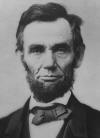 When
the Civil War broke out, it took money to raise an army and pay for salaries,
weapons and supplies. The United States government had no cash reserves and
President Lincoln turned to the Jewish bankers in New York for war loans.
Lincoln was stunned when the different Jewish banking houses told him that they
would lend the money at an interest rate of 24-36%. Eleven states had broken
away from the Union, and even if taxes were doubled, there was no way the loans
could be paid back. After conferring with his advisors, Lincoln made the
decision to issue a currency backed by the United States government, since,
according to the Constitution, Congress had the power to issue currency. About
60 million dollars were printed and stamped “Legal Tender” and used to pay the
soldiers, purchase weapons and supplies. This huge infusion of cash into the
economy proved to be very successful. The government had printed its own money
and circumvented the banks.
When
the Civil War broke out, it took money to raise an army and pay for salaries,
weapons and supplies. The United States government had no cash reserves and
President Lincoln turned to the Jewish bankers in New York for war loans.
Lincoln was stunned when the different Jewish banking houses told him that they
would lend the money at an interest rate of 24-36%. Eleven states had broken
away from the Union, and even if taxes were doubled, there was no way the loans
could be paid back. After conferring with his advisors, Lincoln made the
decision to issue a currency backed by the United States government, since,
according to the Constitution, Congress had the power to issue currency. About
60 million dollars were printed and stamped “Legal Tender” and used to pay the
soldiers, purchase weapons and supplies. This huge infusion of cash into the
economy proved to be very successful. The government had printed its own money
and circumvented the banks.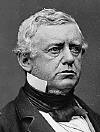 of
charge. On May 27, 1872, the House of Representatives passed a law, which was
known under the name: “ACT REVISING AND AMENDING THE LAWS RELATIVE TO THE
MINTS, ASSAY OFFICES, AND THE COINAGE OF THE UNITE
of
charge. On May 27, 1872, the House of Representatives passed a law, which was
known under the name: “ACT REVISING AND AMENDING THE LAWS RELATIVE TO THE
MINTS, ASSAY OFFICES, AND THE COINAGE OF THE UNITE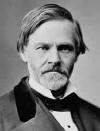 D
STATES.” The banker’s coup d'état to take away the power of free money from
the American people was led by Congressman Samuel Hooper (right) and
Senator John Sherman (left). It took the bankers more than seven months
to muster enough support in the Senate, which passed the bill on January 17,
1873. It established a gold standard and killed silver coinage. This bill
became known in the nation as “The Crime of ’73.” I quote directly from the
Encyclopedia Britannica and what is the “official version” of the banker’s
stooge, John Sherman:
D
STATES.” The banker’s coup d'état to take away the power of free money from
the American people was led by Congressman Samuel Hooper (right) and
Senator John Sherman (left). It took the bankers more than seven months
to muster enough support in the Senate, which passed the bill on January 17,
1873. It established a gold standard and killed silver coinage. This bill
became known in the nation as “The Crime of ’73.” I quote directly from the
Encyclopedia Britannica and what is the “official version” of the banker’s
stooge, John Sherman: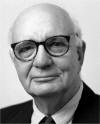 The
chairman of the Federal Reserve System is appointed by the Pre
The
chairman of the Federal Reserve System is appointed by the Pre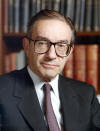 sident
of the United States and confirmed by the Senate. However, once he is elected,
neither the President nor Congress has any power over him or the Board of
Directors he sits on. Many of the chairmen have been Jewish and most people
remember Paul A. Volcker (right, born 1927, served 1979-87) and Alan
Greenspan (left, an American Jew, born 1926 and served 1987-2006). The
current chairman is the American born Jew, Benjamin S. Bernanke
(born 1953 and sworn in February 1, 2006).
sident
of the United States and confirmed by the Senate. However, once he is elected,
neither the President nor Congress has any power over him or the Board of
Directors he sits on. Many of the chairmen have been Jewish and most people
remember Paul A. Volcker (right, born 1927, served 1979-87) and Alan
Greenspan (left, an American Jew, born 1926 and served 1987-2006). The
current chairman is the American born Jew, Benjamin S. Bernanke
(born 1953 and sworn in February 1, 2006). 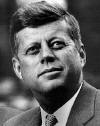 Some
98 years later, President John F. Kennedy would also pay with his life when he
was murdered on November 22, 1963. In much the same way as the murder
investigation of Lincoln was mishandled and purposely bungled, so it was also in
the case of Kennedy’s assassination. What was in no way brought out and almost
never discussed was the fact that just prior to his death, Kennedy had initiated
the printing of interest free money by the U.S. government. I will now quote an
excerpt from “The Dove Magazine, Winter 1991-92”:
Some
98 years later, President John F. Kennedy would also pay with his life when he
was murdered on November 22, 1963. In much the same way as the murder
investigation of Lincoln was mishandled and purposely bungled, so it was also in
the case of Kennedy’s assassination. What was in no way brought out and almost
never discussed was the fact that just prior to his death, Kennedy had initiated
the printing of interest free money by the U.S. government. I will now quote an
excerpt from “The Dove Magazine, Winter 1991-92”: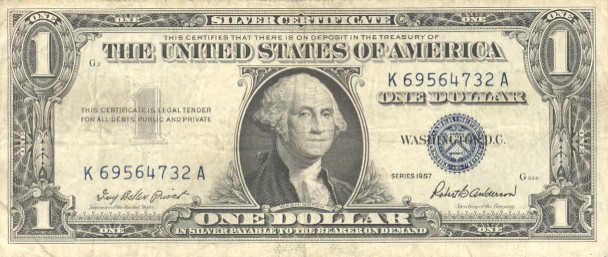
 borrow
money on the stocks to buy more, thereby hoping that at sometime in the future,
they could sell at a profit and pay off their debts. When banks tightened up the
money supply, it all went bust, and for the next ten years, the Federal Reserve
Bank continued to shrink the American economy, just like after the Civil War. It
not only plunged the United States into a deep depression but it also ruined the
economies around the world. Here is what chairman Bernanke (right) of the
Federal Reserve System said about these horrible years:
borrow
money on the stocks to buy more, thereby hoping that at sometime in the future,
they could sell at a profit and pay off their debts. When banks tightened up the
money supply, it all went bust, and for the next ten years, the Federal Reserve
Bank continued to shrink the American economy, just like after the Civil War. It
not only plunged the United States into a deep depression but it also ruined the
economies around the world. Here is what chairman Bernanke (right) of the
Federal Reserve System said about these horrible years: